
How to Turn a Blank Event Space Into a Branded Experience With Roll Up Banners
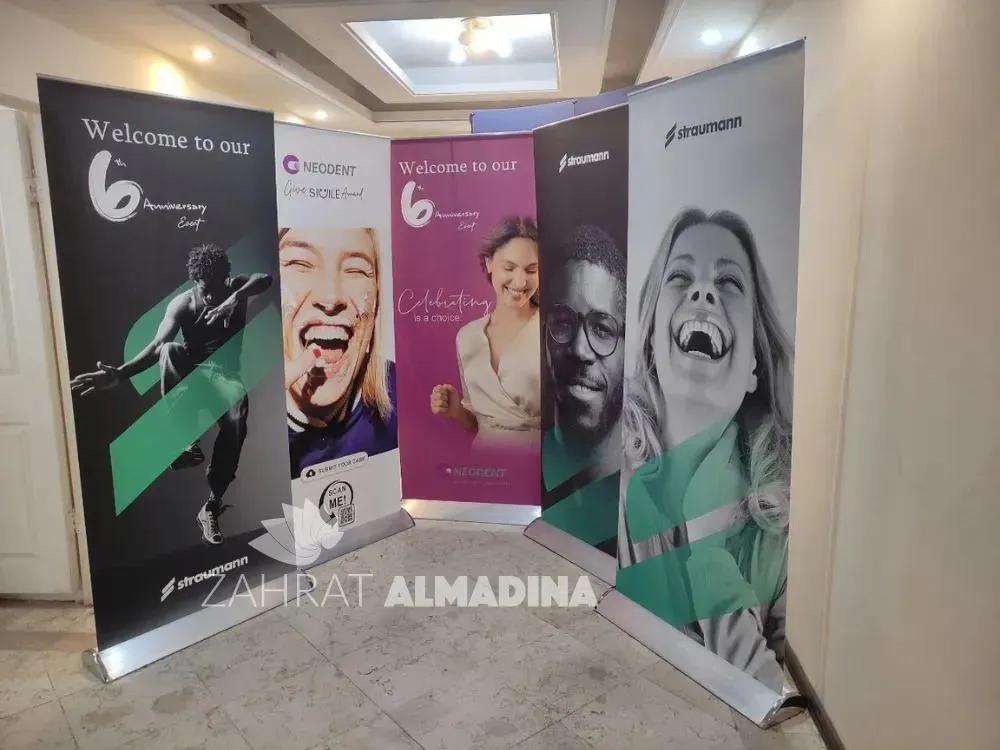
roll up banner

A blank event space can be functional, but it does not always create a memorable experience. At exhibitions, conferences, product launches, trade shows, and corporate events, the surrounding environment can influence how visitors perceive a brand before they even speak with a representative.
One practical way to change an empty area is through roll up stands. These portable displays provide a vertical surface for branding, messaging, product information, or directional signs while taking up relatively little floor space. They can also be set up and removed quickly, making them suitable for temporary events.
For businesses participating in events in Dubai, where exhibition halls and corporate venues can contain many competing displays, thoughtful use of portable branding can help create a clearer and more organized space.
What Are Roll Up Banners?
Roll up banners are retractable display systems consisting of printed graphics attached to a spring-loaded mechanism inside a base. When the display is needed, the graphic is pulled upward and secured to a support pole. When the event ends, it can usually be retracted into the base.
Their portable format makes them useful when a business needs a temporary branded display without installing permanent signage.
A roll up banner can communicate different types of information depending on the purpose of the event, including:
Company branding
Product information
Promotional messages
Event schedules
Directions
Services
Contact information
Campaign messages
Why Roll Up Banners Work Well for Event Spaces
They Add Height to an Empty Area
Large open spaces can sometimes feel visually flat. A vertical banner introduces height and creates a clear visual point without requiring a large installation.
A group of banners can also be used to frame a booth, entrance, presentation area, or product display.
They Help Define Different Zones
An event space does not have to be treated as one large area. Banners can help visually separate different functions.
For example, one banner might identify the reception area, another could introduce the company, and a third could provide information about a particular product or service.
This can make a busy event space easier for visitors to understand.
They Are Easy to Relocate
Because roll up displays are portable, their position can be adjusted according to the layout of the venue. This can be useful when an exhibition stand changes or when different areas receive different levels of visitor traffic.
Creating a Consistent Branded Experience
Using a banner does not automatically create effective branding. The design needs to work with the rest of the event environment.
Start With a Clear Visual Identity
Colours, fonts, logos, and imagery should be consistent with the business's existing brand identity.
If the event space already includes a backdrop, counter, brochures, or product displays, the banner should complement those elements rather than look like a separate design.
Consistency helps visitors understand that different displays belong to the same business.
Give Each Banner a Specific Purpose
One common mistake is trying to put every piece of information onto one banner.
A better approach is to assign a purpose to each display. For example:
Banner 1: Brand introduction and logo
Banner 2: Main product or service
Banner 3: Key benefits or event promotion
Banner 4: Contact or directional information
This creates a natural flow while preventing individual banners from becoming overcrowded.
Designing Roll Up Banners for Easy Reading
Keep Text Short
Event visitors are usually moving rather than standing in front of a banner for several minutes. The main message should therefore be understandable quickly.
Use short headings and supporting phrases instead of long paragraphs.
Prioritize Important Information
The most important content should be visible from a distance. A typical hierarchy might include:
Logo or brand name
Main headline
Key visual
Short supporting message
Call to action or contact information
Not every banner needs all five elements. The hierarchy should depend on its purpose.
Use Images Carefully
High-quality images can make an event display more attractive, but they should support the message rather than compete with it.
A product image, event photograph, or simple graphic can be effective when it is given enough space. Too many images can make a narrow vertical banner feel crowded.
Where to Place Roll Up Banners
Placement can determine whether a banner is noticed or ignored.
At an exhibition, a banner can be positioned near the entrance of a booth to introduce the company before visitors approach the main display. Another can be placed beside a product demonstration area.
For conferences, banners can be used near registration desks, presentation areas, networking spaces, or entrances.
When planning placement, consider:
Visitor movement
Viewing distance
Lighting
Nearby displays
Walkway width
Entrance visibility
Potential obstructions
The banner should remain visible without blocking movement or creating an unnecessary obstacle.
Combining Roll Up Banners With Other Event Displays
Roll up banners work particularly well as part of a broader event setup.
A business might combine them with a printed backdrop, promotional counter, table display, product shelving, brochures, and digital screens. Each element can perform a different role.
For example, a backdrop can provide large-scale brand recognition, while a roll up banner can communicate a specific product message. This division of information keeps the overall space easier to navigate.
Choosing the Right Banner for the Event
Not every event requires the same type of roll up display. A small indoor conference may need a compact banner, while a large exhibition hall may require displays that can be read from greater distances.
Before ordering, consider:
Available floor space
Required banner dimensions
Indoor or outdoor use
Number of events planned
Transport and storage requirements
Design requirements
Expected viewing distance
For businesses planning multiple events, reusable hardware with replaceable graphics may also be worth considering.
Common Mistakes to Avoid
Overloading the banner: Too much information reduces readability.
Using small text: Important details can disappear when visitors view the banner from several metres away.
Ignoring the venue: A design should suit the lighting, space, and surrounding displays.
Inconsistent branding: Different colours and fonts across event materials can make the setup look disconnected.
Poor image quality: Low-resolution images may appear unprofessional when enlarged.
Conclusion
Roll up banners can turn an otherwise empty event area into a more structured and recognizable branded environment. Their vertical format, portability, and relatively small footprint make them suitable for exhibitions, conferences, product launches, trade shows, and corporate events.
The key is not simply to add more banners. A successful event display uses each banner for a clear purpose and connects its design with the rest of the space. With concise messaging, readable graphics, strategic placement, and consistent branding, roll up displays can become a practical part of a complete event experience.